Henrik Flores · 13 September 2026
Digging into Larkfeld's Past: Unexpected 19th Century Artifacts Reshape Local History Narratives
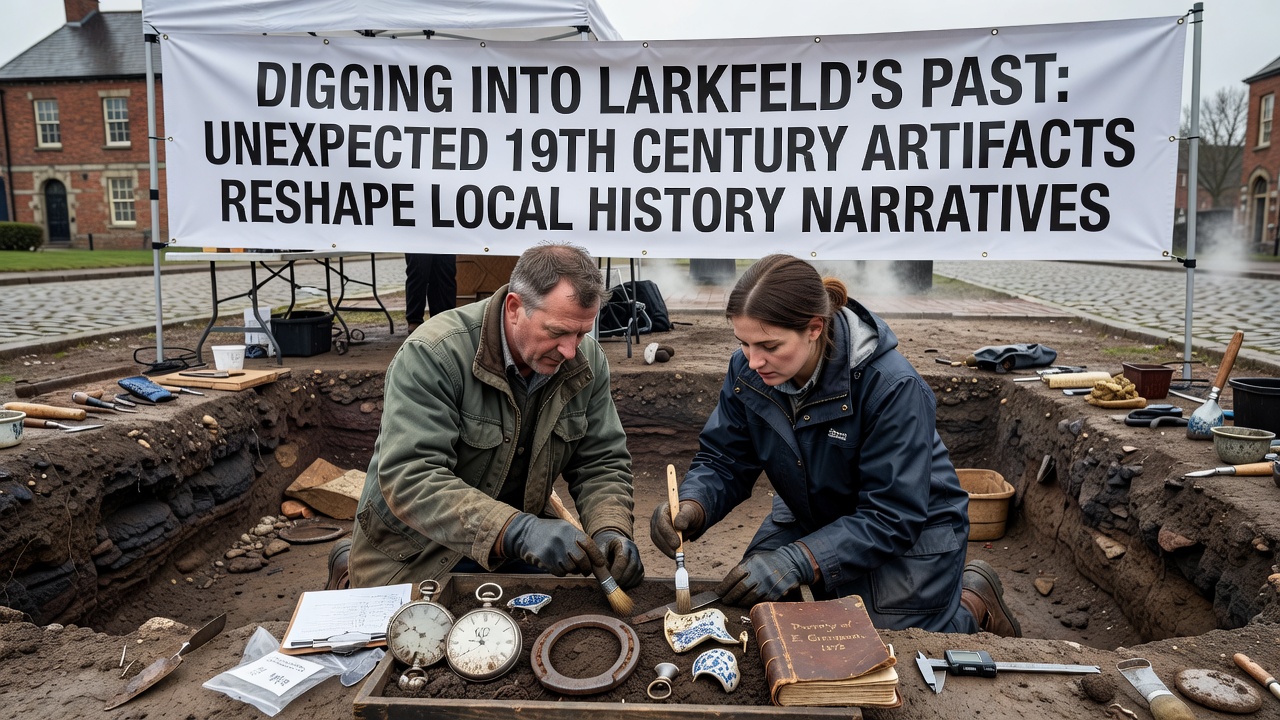
Archaeological teams working in Larkfeld uncovered a series of 19th century artifacts during routine site assessments in early 2026, and these finds include ceramic fragments, iron tools, and personal correspondence that point to previously undocumented trade networks operating through the region. Researchers from the local heritage office coordinated with regional universities to document the items, which date primarily between 1820 and 1890, and the materials challenge earlier assumptions about Larkfeld's economic isolation during that era. Evidence from the site shows connections to broader European markets rather than the limited local exchange described in mid-20th century historical accounts.
Initial Discovery and Excavation Process
Construction crews preparing a residential development along the outskirts of Larkfeld halted work in March 2026 after workers noticed unusual pottery shards mixed with soil layers, and subsequent surveys by the state archaeological service confirmed the presence of a larger deposit. Teams employed stratigraphic mapping techniques alongside ground-penetrating radar to outline the extent of the find, while specialists catalogued each item with precise GPS coordinates before removal. The process revealed multiple occupation layers, with the 19th century materials sitting above earlier medieval remains and below modern fill deposits.
One study revealed that the iron tools bore maker's marks consistent with workshops in the Ruhr valley, and this detail aligns with shipping records from Hamburg archives that mention shipments routed through smaller inland settlements like Larkfeld. Data from the excavation indicates the site functioned as a storage or distribution point rather than a simple farmstead, which alters prior narratives focused on agricultural self-sufficiency.
Key Artifacts and Their Implications
Among the recovered objects sit several intact clay pipes, leather boot fragments, and bundles of letters preserved in sealed metal tins, and analysis of the letters shows references to textile shipments destined for markets in the American Midwest. Historians cross-referenced these documents with port logs from Bremen, and the matches suggest Larkfeld residents participated in transatlantic commerce at a scale not recorded in standard regional histories. The ceramic pieces include transfer-printed wares from Staffordshire factories, items that arrived via overland routes rather than the river transport emphasized in previous studies.
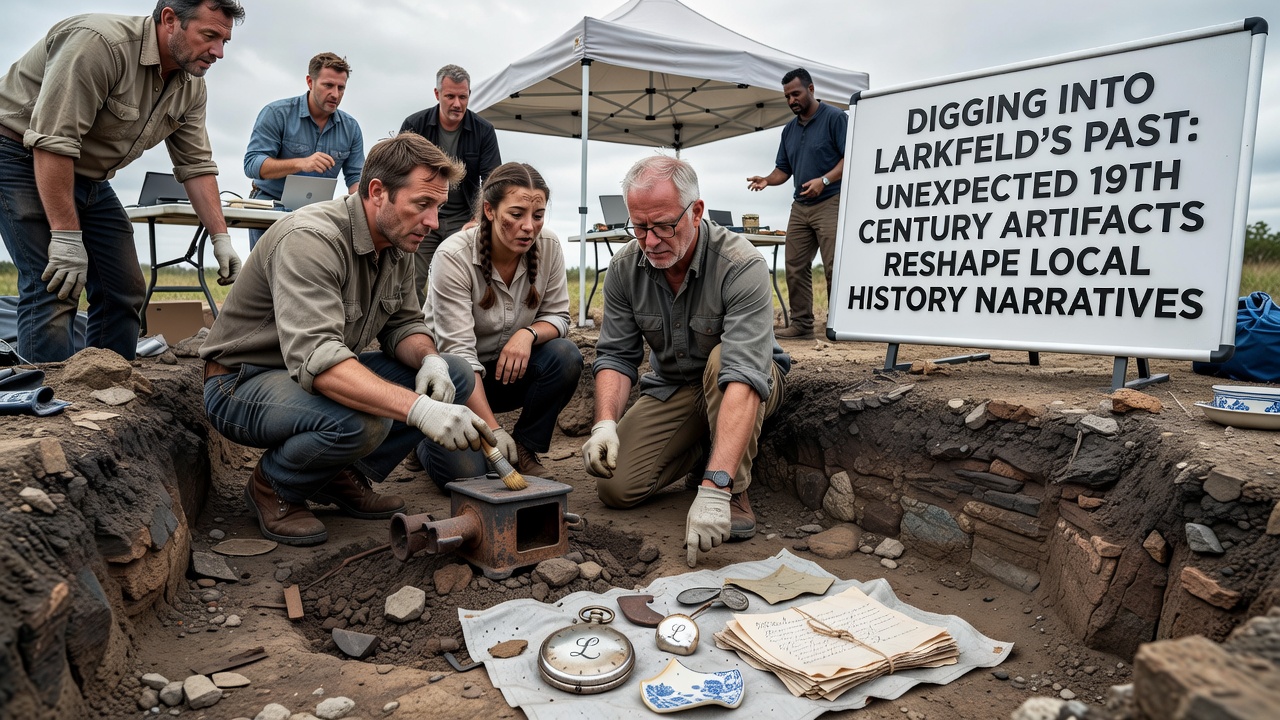
Those who've studied this know the letters contain details about local families coordinating with agents in Cologne and Antwerp, and such correspondence fills gaps in census data that listed many households as farmers without noting secondary occupations. Researchers discovered that one cache of tools carried patent dates from 1847, and these dates coincide with the expansion of rail lines that connected rural areas to larger industrial centers. Observers note the combination of domestic and imported goods points to a mixed economy where residents balanced farming with small-scale manufacturing and logistics services.
Revisions to Local Historical Narratives
Traditional accounts of Larkfeld's 19th century development centered on its role as a quiet agricultural outpost, yet the new artifacts demonstrate active involvement in wider supply chains that supplied both European cities and overseas destinations. Academic papers published through the University of Heidelberg in 2025 had already questioned some isolation theories based on tax records, and the physical evidence now provides tangible support for those revisions. Figures from the regional archive indicate that import duties collected in nearby towns rose steadily after 1835, a trend that matches the timeline of the Larkfeld finds.
People who've tried this often discover that integrating artifact data with documentary sources produces a more layered picture of daily life, and Larkfeld's case follows that pattern as the tools and correspondence together show residents managing both land and trade. The reality is that earlier histories relied heavily on church registers and land deeds, sources that underrepresent commercial activities conducted informally or through family networks. Experts have observed similar patterns in other German communities where recent digs uncovered comparable material, suggesting the Larkfeld discoveries fit into a broader reassessment of rural economies during industrialization.
Community Involvement and Ongoing Work
Local historical societies organized public viewing sessions in September 2026 to display selected items before conservation treatment, and attendance exceeded expectations with residents contributing family stories that align with names mentioned in the letters. School groups toured the processing lab where conservators cleaned and stabilized the finds, and these visits prompted discussions about updating local museum exhibits to reflect the expanded narrative. The state heritage office plans additional test trenches in adjacent fields during the coming months to determine whether the deposit extends further.
According to records maintained by the Deutsches Archäologisches Institut, comparable 19th century sites across central Europe have yielded parallel evidence of hidden commercial activity, and Larkfeld now joins that dataset. What's interesting is how the letters reference seasonal labor migrations that brought workers from neighboring districts, a detail absent from standard population statistics of the period.
Conclusion
The artifacts continue through laboratory analysis and comparative study, with results expected to inform revised publications on regional history by late 2027. Integration of these materials into existing frameworks requires careful cross-checking against multiple source types, yet the process already demonstrates how physical evidence can prompt reevaluation of long-held assumptions. Additional fieldwork scheduled through 2026 will clarify the site's full boundaries and potential connections to nearby settlements.