Jordan Weber · 27 September 2026
Larkfeld Farmers Shift Planting Schedules Following Unseasonably Warm Winter
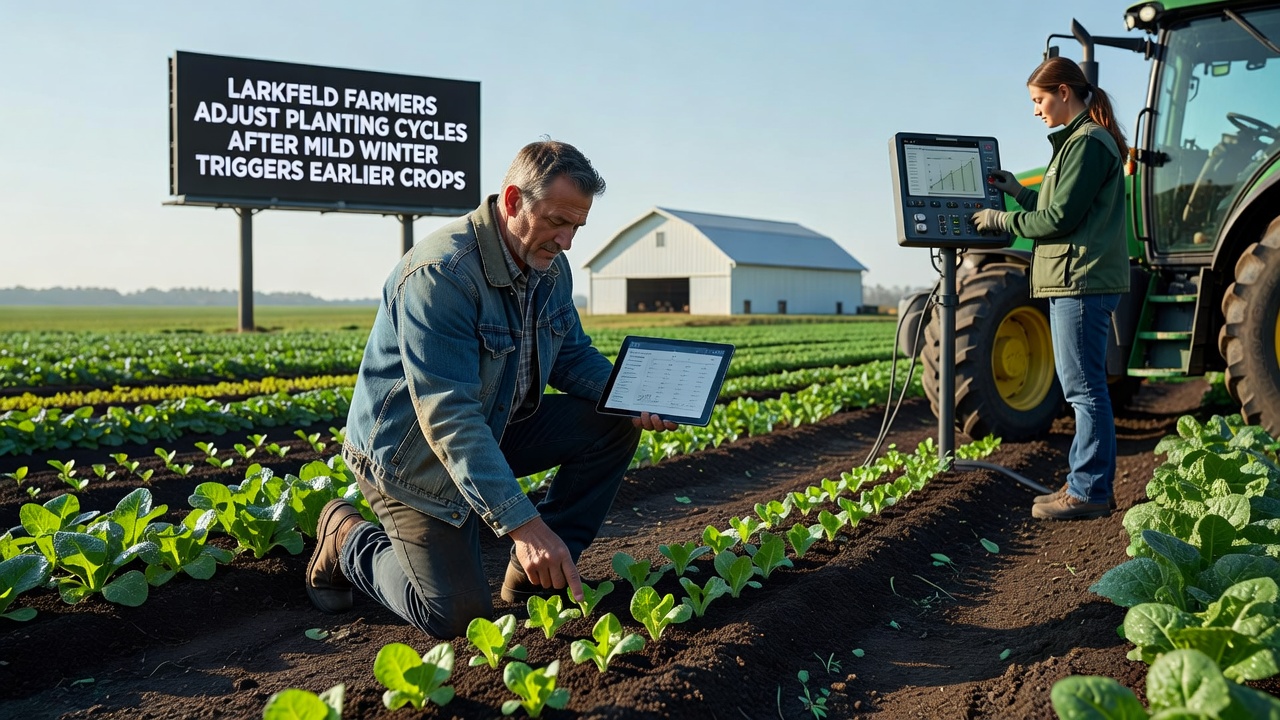
Observers in Larkfeld note that local agricultural operations began adjusting planting cycles in early 2026 after winter temperatures remained several degrees above historical averages, causing soil conditions to warm earlier than usual and prompting crops such as wheat, barley, and certain root vegetables to show initial growth signs weeks ahead of schedule. Data from regional weather stations indicate that average temperatures from December 2025 through February 2026 exceeded long-term norms by 2.8 degrees Celsius, while precipitation levels stayed moderate without the typical frost periods that help regulate dormancy in many crop varieties.
Farmers responded by advancing sowing dates for spring varieties and monitoring soil moisture more closely, since the absence of prolonged freezes left fields workable sooner yet also increased risks of early pest activity. Those who have tracked local conditions over multiple seasons report that equipment schedules shifted accordingly, with tractors and seed drills entering fields by mid-February in several cases rather than the traditional late March window. Soil tests conducted across multiple holdings revealed higher microbial activity levels that supported quicker germination once seeds were placed.
Observed Changes in Crop Development
Records compiled by the Larkfeld Agricultural Cooperative show that first shoots of winter wheat appeared in late January on multiple plots, roughly three weeks earlier than the five-year average documented between 2020 and 2024. Barley fields followed a similar pattern, with emergence noted by early February in lower-lying areas where temperatures stayed consistently mildest. Researchers affiliated with the cooperative collected tissue samples and confirmed accelerated chlorophyll development tied directly to the extended period of above-freezing nights.
Additional monitoring revealed that certain vegetable crops, including carrots and parsnips planted the previous autumn, broke dormancy earlier and required protective netting sooner to guard against emerging insect populations. Extension specialists from the regional university extension service visited several farms in February to document growth stages and advise on irrigation adjustments, noting that evapotranspiration rates had risen due to milder daytime conditions and increased wind exposure.
Adjustments Implemented Across Operations
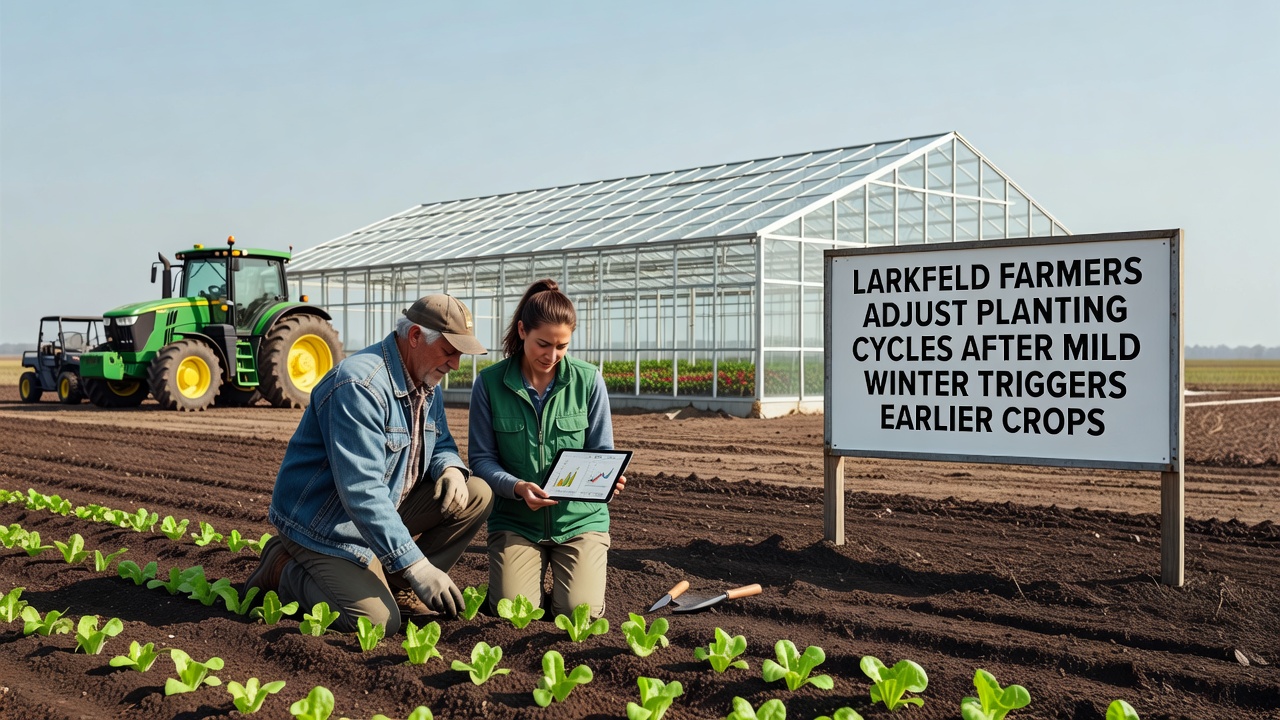
Many producers advanced their spring planting calendar by 10 to 18 days and coordinated with seed suppliers to secure earlier delivery of certified stock. Equipment maintenance routines moved forward as well, allowing cultivators and planters to operate without the delays sometimes caused by frozen ground. Several holdings introduced split-application fertilizer strategies to match the faster nutrient uptake observed in the advanced growth cycle, while others increased scouting frequency for aphids and other insects that typically remain inactive until later months.
Cooperative buying groups arranged bulk purchases of row covers and floating mulches to protect vulnerable seedlings during any late cold snaps that might still occur. Data shared among members indicated that fields with south-facing slopes experienced the most pronounced shifts, whereas shaded or higher-elevation plots retained more typical timing. By September 2026, harvest crews expect to begin operations earlier than usual for several crops, potentially extending the overall season length and requiring staggered labor scheduling to accommodate overlapping maturity windows.
Supporting Evidence from Broader Monitoring
According to records maintained by the National Oceanic and Atmospheric Administration, the winter of 2025-2026 ranked among the warmest on record for the broader mid-latitude zone that includes Larkfeld. NOAA winter temperature summaries detail how reduced snow cover and fewer freeze-thaw cycles contributed to earlier soil warming across comparable agricultural regions. Parallel observations compiled by Agriculture and Agri-Food Canada for similar climatic zones in eastern provinces show analogous patterns of earlier crop emergence during recent mild winters, providing cross-regional context for the adjustments underway locally.
Those tracking phenological indicators note that flowering times for certain hedgerow species used as bioindicators also advanced, aligning with the field observations reported by Larkfeld growers. Soil temperature probes installed at multiple depths confirmed that the 10-centimeter layer reached planting thresholds by the third week of February, whereas historical averages placed that milestone in mid-March.
Conclusion
The sequence of adjustments undertaken by Larkfeld farmers illustrates a direct operational response to measurable changes in winter conditions and resulting crop behavior. Continued documentation through the 2026 growing season will supply additional data points on yield outcomes, labor requirements, and input efficiencies under the revised timelines. Cooperative reports scheduled for release later in the year are expected to compare these results against baseline figures from prior seasons, offering further clarity on the practical implications of the observed shifts.