Jordan Weber · 11 October 2026
Traffic Data Analysis Prompts Signal Modernization Talks for Larkfeld Downtown
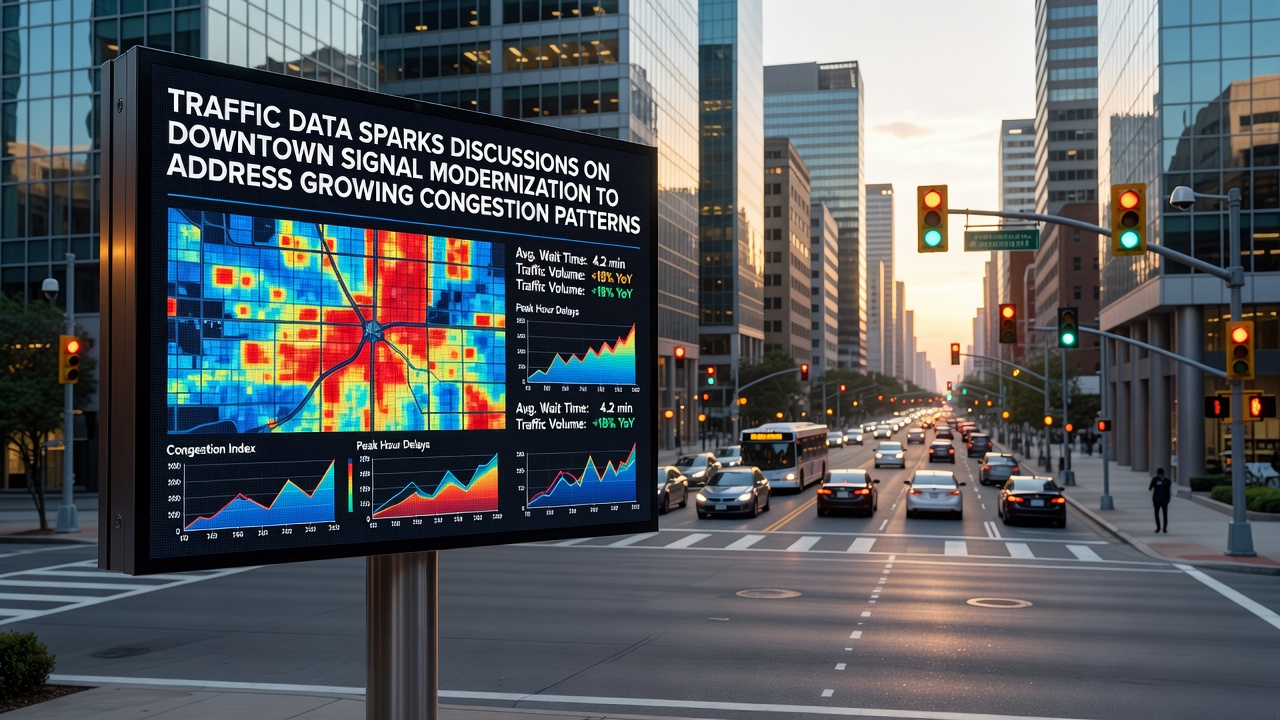
Recent traffic volume records from Larkfeld's central business district have highlighted steady increases in vehicle delays at multiple intersections, prompting city planners and transportation engineers to review options for updating signal systems. Data collected through sensors and cameras over the past eighteen months shows average commute times rising by 22 percent during morning and evening peaks compared with figures from five years earlier, and this pattern has drawn attention from municipal departments responsible for infrastructure maintenance.
Officials note that many downtown signals still operate on fixed timing cycles installed more than two decades ago, whereas surrounding arterial roads have already received adaptive controllers that adjust to real-time flow. The mismatch creates bottlenecks where side-street traffic waits through multiple cycles while main corridors carry growing numbers of commuters and delivery vehicles. City records indicate that intersection throughput has dropped from an average of 1,800 vehicles per hour in 2020 to roughly 1,450 vehicles per hour in the most recent quarter.
Patterns Revealed by Sensor Networks
Engineers installed additional Bluetooth readers and pneumatic tube counters at twelve key intersections last spring, and the resulting datasets reveal recurring congestion clusters between 7:15 a.m. and 9:30 a.m. along Maple Avenue as well as between 4:45 p.m. and 6:20 p.m. on Elm Street. Weekend counts, once considered secondary, now show comparable spikes on Saturdays between 11:00 a.m. and 1:30 p.m. because of increased retail activity and transit connections. These measurements align with broader regional reports issued by the Federal Highway Administration that document similar shifts in mid-sized urban cores across North America.
Researchers at the local university's civil engineering department cross-referenced the counts with weather and event calendars, finding that precipitation adds another 14 percent to delay times while festival weekends can double queue lengths at the central square. The combined evidence has led transportation staff to model several modernization scenarios that incorporate vehicle-to-infrastructure communication and priority phasing for emergency vehicles and buses.
Proposed Upgrades and Technical Options
Initial proposals center on replacing electromechanical controllers with networked units capable of receiving data from connected vehicles and adjusting green times within seconds. One option includes the addition of overhead mast-arm cameras and radar detectors that feed into a central management platform, allowing operators to override schedules during incidents. A second approach would integrate pedestrian countdown signals and bicycle detection loops to improve safety metrics that current systems do not track.
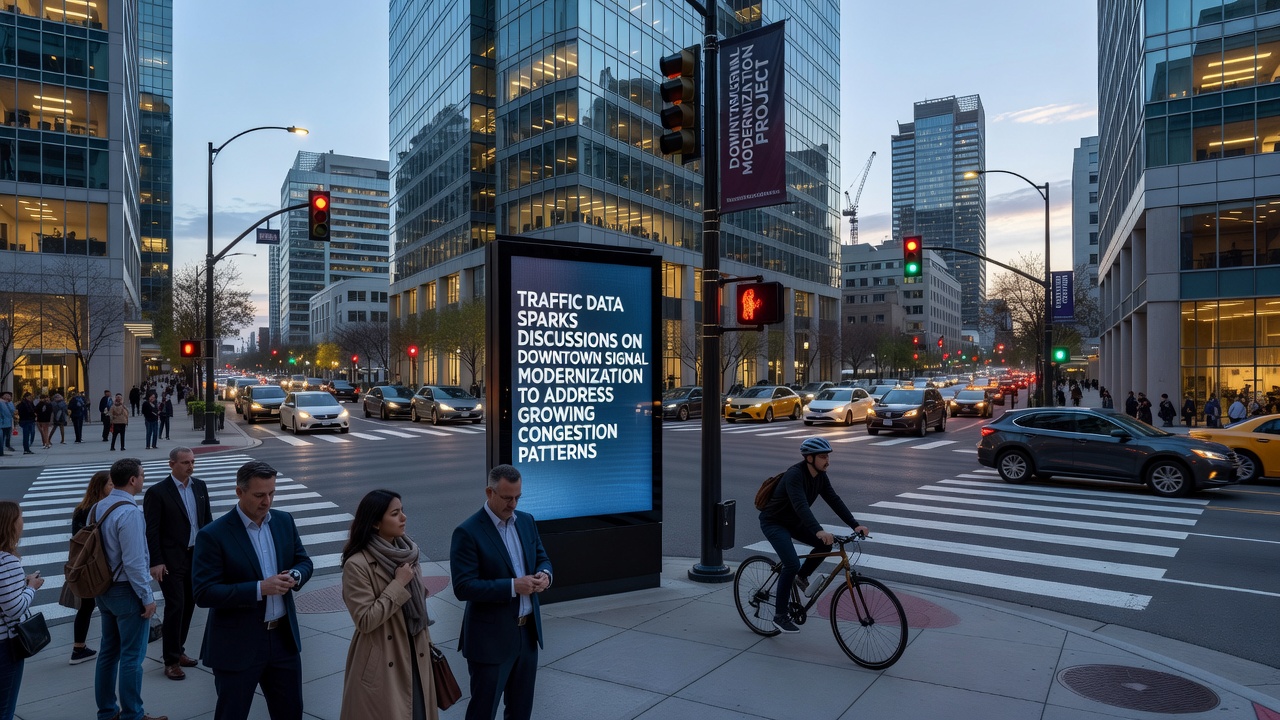
Cost estimates prepared by the public works department range from $1.8 million for a phased controller swap across eight intersections to $3.4 million when full detection upgrades and fiber connectivity are included. Funding discussions have referenced grants available through the U.S. Department of Transportation's Advanced Transportation and Congestion Management Technologies Deployment program, which has supported comparable projects in other municipalities since 2016. Engineers have also examined case studies from Transport for New South Wales, where similar adaptive systems reduced travel times by 15 to 25 percent on comparable street grids.
Stakeholder Meetings and Timeline
Public information sessions scheduled for October 2026 will present the sensor findings alongside preliminary modeling results, giving residents adn business owners an opportunity to comment on phasing priorities and potential construction impacts. City council members have requested that staff prepare three implementation timelines, one of which aligns construction windows with planned water-main replacements to limit repeated street closures. A separate working group has begun reviewing procurement rules to ensure any new equipment meets current cybersecurity standards for connected infrastructure.
Transit operators and emergency services have already submitted letters supporting coordinated signal timing that would reduce response variability. Data shared by the fire department shows average dispatch-to-arrival intervals at downtown addresses have lengthened by 47 seconds over the past three years, with signal delay cited as a contributing factor in 31 percent of calls. These operational details are expected to inform priority corridors when final design packages are assembled.
Conclusion
City records confirm that traffic volumes and delay metrics continue to trend upward, and the upcoming October 2026 sessions will determine whether modernization proceeds to design and funding allocation. The sensor networks already in place provide ongoing measurement points that can validate performance after any upgrades are completed, offering a clear baseline for future evaluations.